Solar pricing in Pakistan moves more than people expect, mostly because the bulk of the equipment is imported and priced against the rupee-dollar exchange rate. Rather than quote a single number that'll be stale in a few months, here's how the cost actually breaks down so you can sanity-check any quote you receive.
The big-ticket items
- Panels — typically the largest single line item, priced per watt. Mono PERC panels remain the standard choice for residential and commercial installs for their balance of cost and efficiency.
- Inverter — a meaningful cost swing exists here. Budget inverters are cheaper but tend to lack precise MPPT tracking and remote monitoring, and can be less reliable in high-heat, high-humidity conditions. Mid-tier and premium brands cost more but generally hold up better over a 10+ year system life and often carry longer warranties.
- Batteries (hybrid/off-grid only) — lithium batteries cost more upfront than lead-acid tubular batteries but last considerably longer and handle deeper daily cycling better, which usually makes them the better value over the system's lifetime for anyone cycling the battery daily.
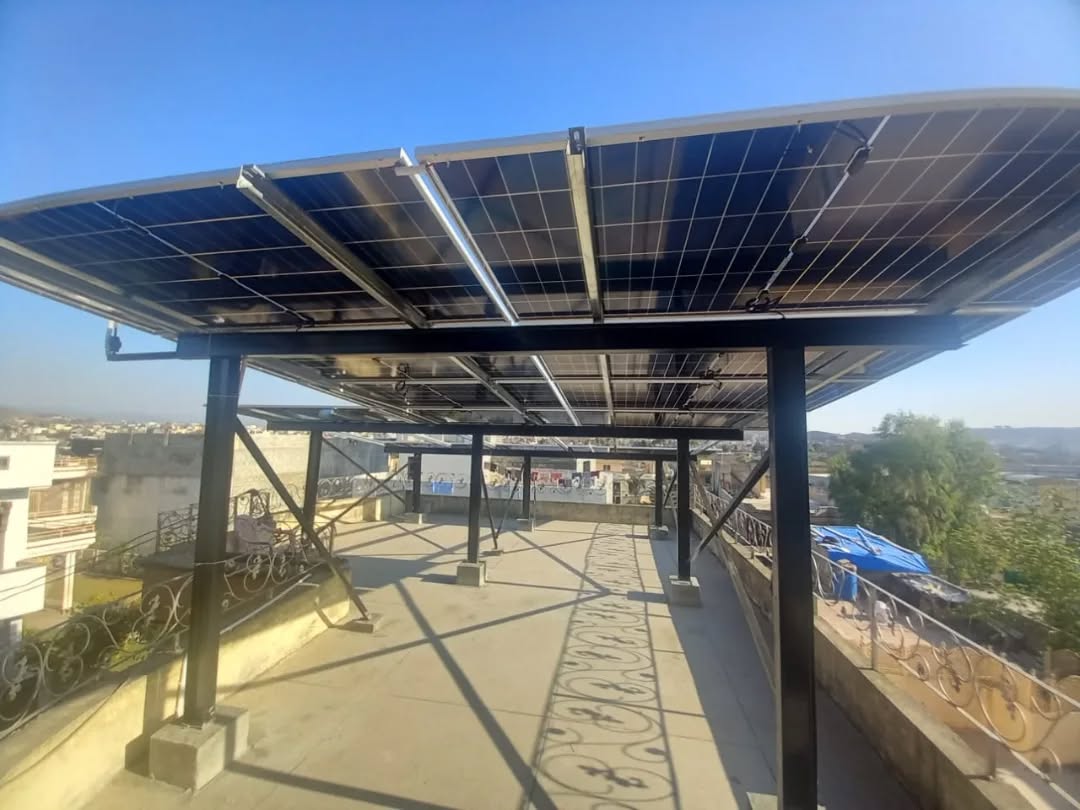
- Mounting & racking — varies by roof type. A flat concrete roof is the cheapest and fastest to rack; angled or tiled roofs and larger commercial arrays cost more in structural work.
The parts that get left off cheap quotes
This is where a lot of "too good to be true" quotes fall apart once installation actually starts:
- DC and AC surge protection devices (SPDs), DC isolators, and an AC distribution board upgrade — often mandatory for a safe, code-compliant, warranty-valid installation
- The bi-directional smart meter and DISCO processing fees for a net metering or net billing application
- Earthing work, which is not optional in a country with Pakistan's lightning and voltage-fluctuation profile
- Labour for a complex or tiled roof, which typically costs meaningfully more than a standard flat concrete rooftop
Why the same "10kW system" can vary so much in price
Two quotes for the same nominal system size can differ by a large margin once you account for panel tier, inverter brand, whether a battery is included, roof complexity, and whether protective equipment and DISCO fees are itemized or quietly left out. That's exactly why we give line-item quotes after a site survey rather than a flat package price over the phone — it's the only way to compare quotes fairly and know what you're actually paying for.
What actually moves the payback period
Under the current net billing rules, payback depends less on raw system size and more on how much of your production you consume directly versus export. A well-sized system feeding real daytime consumption can still pay back within a few years; an oversized system exporting most of its output at the lower buyback rate will take meaningfully longer. If you want a number specific to your bill and roof, that's exactly what our free site survey is for.