
The single most common question we get on a site visit is some version of "so how many panels do I actually need?" The honest answer is that it depends on your consumption, your roof, and — as of 2026 — how the new net billing rules affect your particular case. But there's a reliable way to get to a real number, and it starts with your electricity bills, not your roof size.
Start with your units, not your budget
Pull your last 6–12 months of bills and look at the units (kWh) consumed each month, not the rupee amount. Pakistani households typically see winter and summer consumption swing significantly because of heating, cooling, and geysers, so a single month's bill will undersize or oversize your system depending on when you happen to check.
Average your monthly units, divide by 30 to get a rough daily figure, and that's your real target — the number of units your system needs to produce on an average day to meaningfully offset your usage.
From daily units to system size
Islamabad and Rawalpindi typically get somewhere around 4.5–5.5 peak sun hours a day on average across the year, though this varies by season. A rough (and deliberately conservative) formula we use for early estimates is:
The 0.8 factor accounts for inverter losses, wiring losses, panel derating in heat, and dust — all of which take a real bite out of theoretical panel output in Pakistan's climate.
So a home averaging 25 units a day works out to roughly a 6–7 kW system under that formula — which lines up with why 5 kW and 10 kW inverters are the most commonly stocked sizes in the market; they bracket the needs of a typical household comfortably.
From kW to panel count
Once you have a target system size, panel count follows from whatever panel wattage you're specifying. Most residential installs in Pakistan today use panels in the 550–600W range, so:
- 5 kW system ≈ 9–10 panels
- 7 kW system ≈ 12–13 panels
- 10 kW system ≈ 17–18 panels
- 15 kW system ≈ 25–27 panels
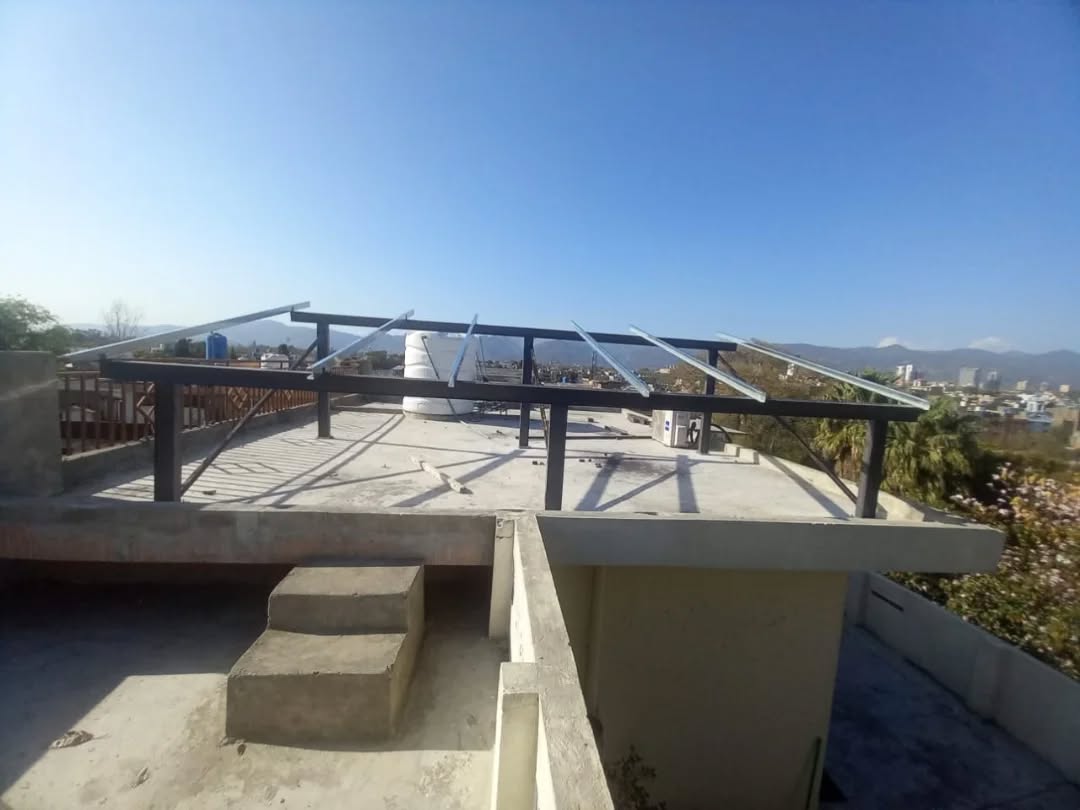
Roof area matters here too — a 10 kW system needs somewhere around 55–65 square meters of usable, unshaded roof space depending on panel size and row spacing for maintenance access.
Why "bigger is safer" isn't quite true anymore
Under the old net metering rules, oversizing was a reasonably safe bet because any extra production exported at full retail value. Under 2026's net billing rules, exported units are worth substantially less than imported ones, so a system that's noticeably larger than your actual consumption now pays back more slowly than one that's matched closely to your load — unless you're pairing it with battery storage to use that surplus yourself in the evening.
This is exactly why we do a proper load audit and a site survey before quoting a size, rather than working backward from "how much roof do you have." A free site survey takes the guesswork out of both the panel count and the payback math.